Ever had a big bill sneak up on you? Think new winter tires, annual property taxes, or even holiday gift-giving. Suddenly, you need to find a few hundred—or even a few thousand—dollars, and it throws your whole budget into chaos.
A sinking fund is your secret weapon against these kinds of predictable expenses. It’s a simple but brilliant strategy: you save small, manageable amounts of money over time for a specific goal you know is on the horizon. Instead of scrambling when the bill arrives, you’re already prepared.
Understanding the Basics of a Sinking Fund
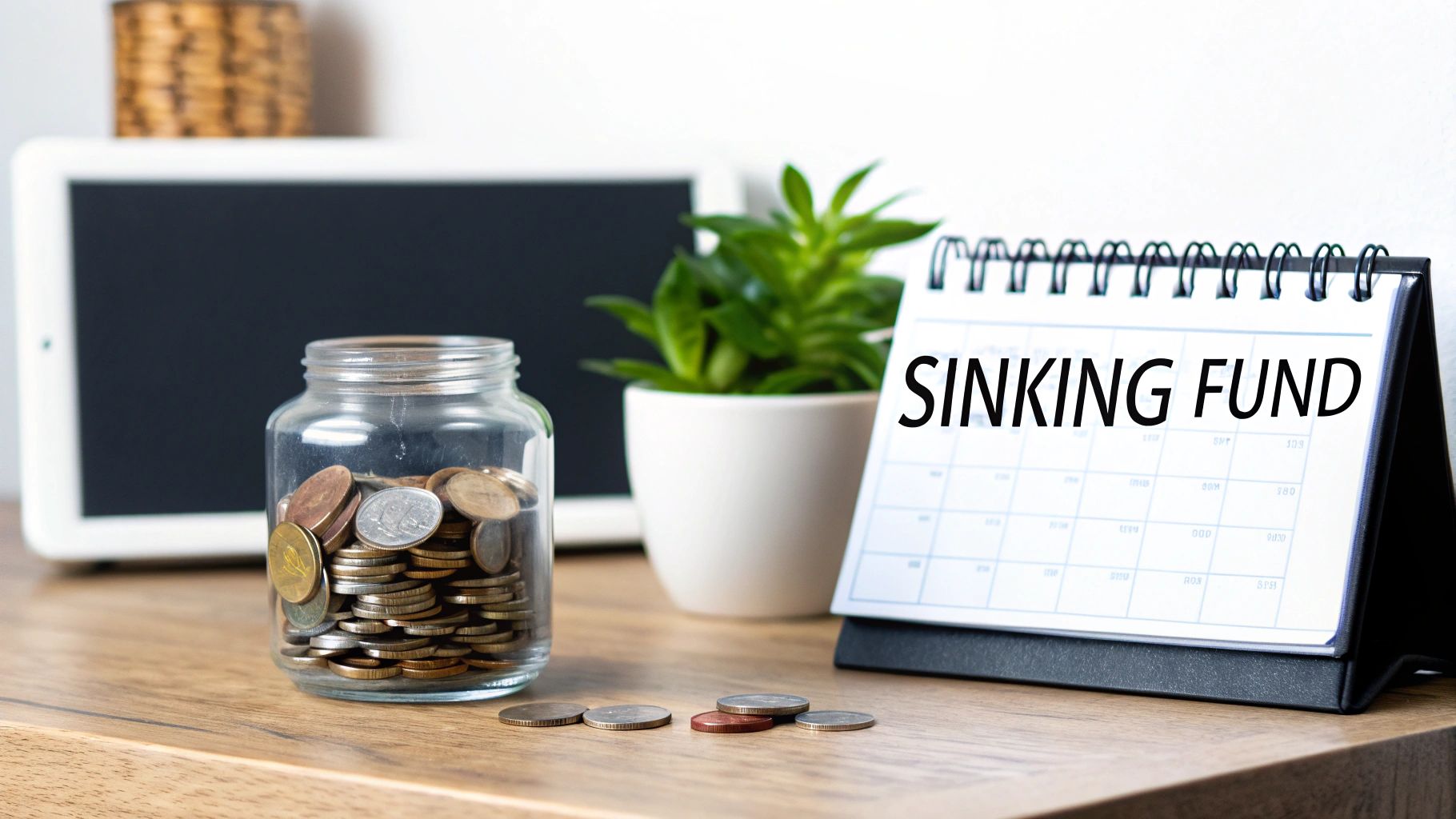
The easiest way to picture a sinking fund is as a digital version of an old-school savings jar. You wouldn't raid your "Vacation to Banff" jar to pay for a night out, right? A sinking fund brings that same focused discipline to your finances, helping you intentionally put money aside for future costs.
The whole point is to plan, save, and spend without the stress. By breaking down a big, intimidating cost into smaller monthly contributions, you turn a future financial headache into a series of achievable steps. It’s an incredibly practical method for Canadians who have to juggle both recurring annual bills and bigger one-time purchases.
Key Components of a Sinking Fund
What makes a sinking fund so effective? It all comes down to three core elements that give every dollar a clear job.
- A Specific Goal: Every fund is tied to one, and only one, expense. It could be for next year’s car insurance, a new laptop for school, or even saving up for a vet bill you know is coming.
- A Defined Target Amount: You know exactly how much you need to save. No guesswork. Your goal might be $1,200 for your annual insurance premium, plain and simple.
- A Set Timeline: The expense has a due date, which creates a natural deadline for your savings plan. If you need that $1,200 in 12 months, the math is easy: you need to save $100 a month.
This is worlds away from a general savings account, where money often sits without a clear purpose or timeline. With a sinking fund, your savings have direction.
A sinking fund turns panic-inducing bills into planned, manageable payments. It’s about taking control and giving yourself some financial peace of mind.
For example, let's say your property taxes are $3,600 a year. Instead of taking a huge hit to your chequing account when the bill comes, you can set up a sinking fund to put aside $300 every month. When tax time rolls around, the money is just sitting there waiting for you—no stress, no dipping into your emergency fund.
This is where a tool like NeoSpend really shines. You can create different "buckets" or savings goals for each sinking fund, letting you track your progress for each one separately. It keeps everything organized and helps you see exactly where your hard-earned money is going.
Sinking Funds vs. Emergency Funds: What’s the Difference?
It’s easy to get these two mixed up. Both are about saving money, but they’re completely different tools for completely different jobs. Knowing how—and when—to use each one is crucial for keeping your finances on solid ground. Confuse them, and you might find yourself in a tight spot when you can least afford it.
An emergency fund is exactly what it sounds like: a stash of cash for true, out-of-the-blue crises. This is your financial safety net for life’s big, ugly surprises—a sudden layoff, an unexpected medical bill for you or a pet, or a flooded basement that needs immediate attention. It’s strictly for the unknown.
A sinking fund, on the other hand, is for planned, predictable expenses. You’re saving for something you know is coming, even if you haven't circled the exact date on the calendar. Think of it as strategic saving, not reactive scrambling.
It All Comes Down to Purpose
The real difference between these two funds is their "why."
Your emergency fund is about survival. It’s there to cover your essential living costs and keep you out of debt when a real crisis hits. Most financial experts suggest having three to six months' worth of essential living expenses tucked away.
Sinking funds? They’re about thriving without the stress. They let you pay for big, non-emergency expenses without blowing up your monthly budget or raiding your long-term savings. They turn financial panic into a calm, organized plan.
Here’s a real-world Canadian example: Your car suddenly breaks down on the 401 and needs a pricey, immediate repair. That’s an emergency. But saving up for a new set of winter tires you know you'll need before the first snowfall? That’s a perfect job for a sinking fund.
An emergency fund is your shield against life's unpredictable storms. A sinking fund is your roadmap for navigating the expenses you can see on the horizon.
Getting this distinction right is key to building a resilient financial life. Your emergency fund should stay locked down unless a true disaster strikes. Sinking funds are designed to be spent once you hit your goal, letting your day-to-day budget breathe easy.
Comparing Sinking Funds and Emergency Funds
To make it crystal clear, here’s a direct comparison that highlights the distinct roles these two funds play in your financial strategy.
| Feature | Sinking Fund | Emergency Fund |
|---|---|---|
| Purpose | To save for a specific, predictable expense. | To cover unexpected, urgent financial shocks. |
| Goal | Defined and time-bound (e.g., $1,800 for property tax). | A broad safety net (e.g., 3-6 months of living costs). |
| Timeline | Short to medium-term, based on the goal's due date. | Long-term and ongoing; should always be maintained. |
| Access | Intended to be spent when the goal is met. | Should only be accessed for true emergencies. |
As you can see, one is for proactive planning, and the other is for reactive protection. Both are essential, but they are not interchangeable.
A tool like NeoSpend is great for keeping these funds organized and separate. You can set up a dedicated “Emergency Fund” savings goal and then create multiple other sinking fund goals for things like “New Laptop” or “Holiday Gifts.” This digital separation makes it easy to track your progress and helps ensure you don't accidentally dip into your emergency cash for a planned purchase.
The Power of Planning: Why Sinking Funds Work
Let’s be real: sinking funds are one of the best ways to finally break the cycle of debt and money stress. When you plan for those big, predictable expenses, you turn them from scary financial monsters into totally manageable goals. It’s a huge mental shift—instead of constantly reacting to bills, you’re proactively calling the shots.
So, why is this so effective? It tackles a classic human habit head-on: looking at our chequing account and thinking, "Nice, I've got money to spend." A sinking fund gives those dollars a job before you have the chance to spend them. By tucking that money away, you’re basically telling yourself, "Hands off! This is for the new tires," or "This is for that trip to Mont-Tremblant." It’s a simple trick, but it works.
Avoid Debt and Dial Down the Financial Stress
The single biggest win here is avoiding high-interest credit card debt. When a predictable expense like a $1,500 property tax bill shows up, what do most of us do? We swipe the credit card and hope for the best. If you can't pay it off right away, that $1,500 bill suddenly starts costing you a whole lot more thanks to interest.
A sinking fund lets you completely sidestep that trap. By setting aside just $125 a month for a year, you’ll have the cash ready and waiting. No debt. No interest. And best of all, no late-night panic. There’s an incredible peace of mind that comes from knowing you’re prepared. Big bills stop being a source of dread and start feeling like just another thing you’ve got covered.
A sinking fund isn't just about saving money; it's about buying your future self peace of mind. It turns financial dread into financial confidence.
Build Stronger Financial Habits for Good
Getting into the rhythm of contributing to your sinking funds builds an incredibly powerful saving habit. It literally retrains your brain to put your future goals ahead of whatever’s grabbing your attention right now. Every month you move money into those funds, you’re flexing a muscle of financial discipline that strengthens every other part of your money life.
This is where a tool like NeoSpend can be a total game-changer. Instead of dumping all your savings into one big, confusing pile, you can create separate digital "buckets" for each goal—think "Winter Tires," "Holiday Gifts," or "Vacation Fund." Watching those progress bars fill up gives you a real visual high-five and keeps you motivated.
Plus, you can automate your transfers right in the app. This way, you’re paying your future self first without even thinking about it, guaranteeing you’ll hit your targets. NeoSpend helps you build smarter money habits by making saving simple and organized.
How to Start Your First Sinking Fund
Alright, let's move from theory to action. Getting your first sinking fund off the ground is way easier than you might think, and it only takes a tiny bit of simple math. The whole idea is to take a big, intimidating future expense and chop it down into small, totally doable monthly savings targets. This turns a potential money shock into a calm, organized plan.
The process really just comes down to one simple formula that puts you back in the driver's seat.
Total Goal Amount ÷ Number of Months to Save = Your Monthly Contribution
That’s it. Once you know the total cost and your timeline, you’ve got a clear, actionable roadmap to your goal—no stress or guesswork involved.
Calculating Your Sinking Fund Contributions
Let's put this formula to work with a couple of real-world Canadian scenarios. Say you want to buy a used car and need $4,000 for the down payment. You've decided to give yourself 20 months to save up for it.
- Goal: $4,000 for a car down payment
- Timeline: 20 months
- Calculation: $4,000 ÷ 20 months = $200 per month
Suddenly, you're not staring down a massive $4,000 bill. Instead, you're focused on a much more achievable goal of putting away $200 each month.
Here's another one that many Canadian homeowners know all too well: property taxes. If your annual bill comes in at $1,800, that can be a tough pill to swallow all at once.
- Goal: $1,800 for property taxes
- Timeline: 12 months
- Calculation: $1,800 ÷ 12 months = $150 per month
By setting aside $150 every month, that yearly bill becomes a total non-event. The money is just there when you need it. No dipping into your emergency fund, and definitely no racking up credit card debt. It's a simple process that shows how a little planning ahead helps you relax.
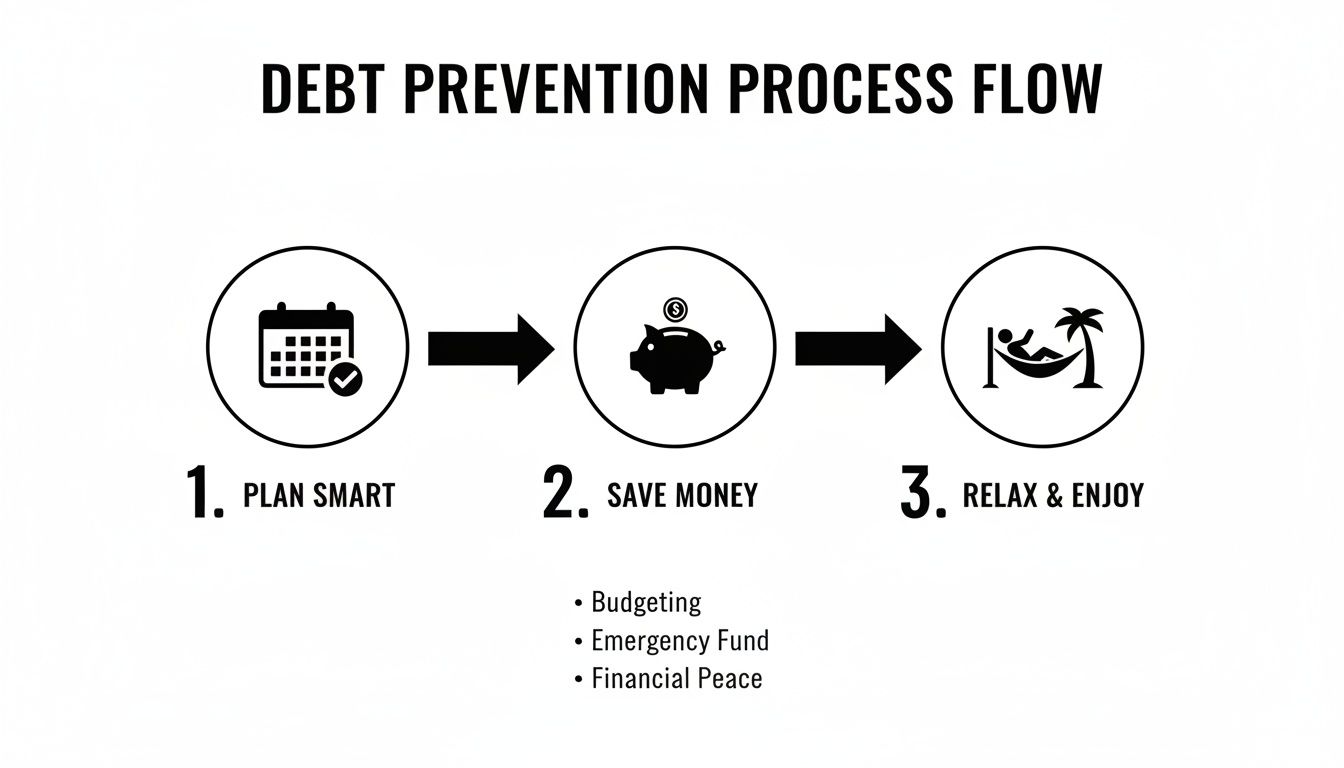
This visual really nails it: proactive planning leads directly to a stress-free life. A sinking fund isn't just a savings strategy; it's a tool for peace of mind.
Choosing the Right Home for Your Funds
Once you’ve crunched the numbers, the next step is deciding where to stash your sinking fund cash. The golden rule here is to keep it separate from your daily chequing account. This "out of sight, out of mind" trick is surprisingly effective at stopping you from accidentally spending the money you've worked so hard to save.
For most sinking funds, the best place to park your money is in a high-yield savings account. This type of account gives you two key things:
- Safety: Your money is secure and easy to get to when the time comes.
- Growth: You'll earn a bit of interest, which helps your savings grow a little faster over time.
This is where a modern tool like NeoSpend can be a game-changer. Instead of juggling multiple bank accounts, you can just use the NeoSpend app to create different savings goals or "buckets" for each sinking fund. You can label them "New Tires," "Holiday Gifts," or "Vacation," and track your progress for each one separately. It keeps you organized, motivated, and in complete control of your money goals, making the whole process feel almost effortless.
Common Examples of Sinking Funds for Canadians
Alright, you get the "how" and "why" of sinking funds. But what should you actually be saving for?
The best sinking funds are for those expenses that love to pop up out of nowhere and throw your budget into a tailspin. Think of them as your secret weapon to turn a potential panic into a calm, planned payment. To get your gears turning, let’s look at some classic Canadian examples.
A good rule of thumb? If a certain type of bill always makes you wince, that’s probably where you should start.
Home Ownership Costs
Anyone who owns a home in Canada knows the mortgage is just the beginning. A sinking fund is your best friend for handling all the other costs that come with it, so you’re never caught off guard.
- Property Taxes: This is a big one. Instead of scrambling to find a lump sum of $3,000 (or more!) when the bill arrives, you can just tuck away a piece of it every month. Problem solved.
- Future Repairs: That roof has a lifespan, and so does your furnace. Setting aside a little bit each month for the big-ticket replacements means you’ll have the cash ready and waiting when the time comes. No emergency loans needed.
- Annual Maintenance: Think about the smaller stuff that adds up, like window cleaning, lawn care, or getting the chimney swept. These are perfect candidates for a sinking fund.
Vehicle Expenses
Between our wild seasons and regular upkeep, cars can be a massive source of lumpy, unpredictable expenses. A sinking fund helps you smooth out those financial potholes so you can keep on driving, stress-free.
- New Tires: Every Canadian driver knows the non-negotiable cost of good winter tires. Coming up with $800 on the spot is tough. Saving for it over a few months? Way more manageable.
- Annual Insurance Premiums: You can often score a nice discount by paying your car insurance in one go. A sinking fund makes that possible without completely draining your chequing account.
- Regular Maintenance and Repairs: Set aside a bit each month for the inevitable oil changes, brake jobs, and other routine work. It beats the shock of a surprise bill from your mechanic.
Sinking funds transform your relationship with money. Instead of asking, "Where did my money go?" you start telling it exactly where to go.
Personal Goals and Life Events
Sinking funds aren't just for paying bills. They're an incredible tool for saving up for the fun stuff in life—the things you actually want to spend money on—without a shred of guilt or a dollar of debt.
- Dream Vacations: Got your eye on a trip to see the Northern Lights or a tour of the Maritimes? A dedicated sinking fund means you can pay for that entire getaway with cash you’ve already saved.
- Weddings and Anniversaries: Big celebrations often come with even bigger price tags. When you break that cost down and save for it over a year or more, it suddenly feels totally doable.
- Education: Whether it’s putting money aside for your kid's RESP or investing in your own professional development course, a sinking fund helps you build for the future.
Irregular and Seasonal Expenses
And finally, let’s talk about all those other costs that pop up every single year like clockwork but never quite fit into a tidy monthly budget.
- Holiday Shopping: Want to avoid that dreaded January credit card bill? Save a specific amount each month for gifts, travel, and all the festive extras.
- Veterinary Bills: If you have a furry family member, you know that an annual check-up or an unexpected vet visit can be expensive. A pet-specific fund offers huge peace of mind.
- Annual Subscriptions: Think about all those things that bill you once a year, like Amazon Prime, software licenses, or that gym membership you swear you'll use more.
This is where a tool like NeoSpend really shines. You can create a separate "bucket" or savings goal for every single one of these categories—"Property Taxes," "New Tires," "Holiday Gifts"—and see your progress in real-time. It’s the perfect way to take those abstract goals and turn them into a clear, organized plan.
Put Your Savings on Autopilot for Guaranteed Success
Let’s be honest, the real secret to consistently growing your sinking funds isn't superhuman willpower. It's about taking the daily decision-making completely out of the equation.
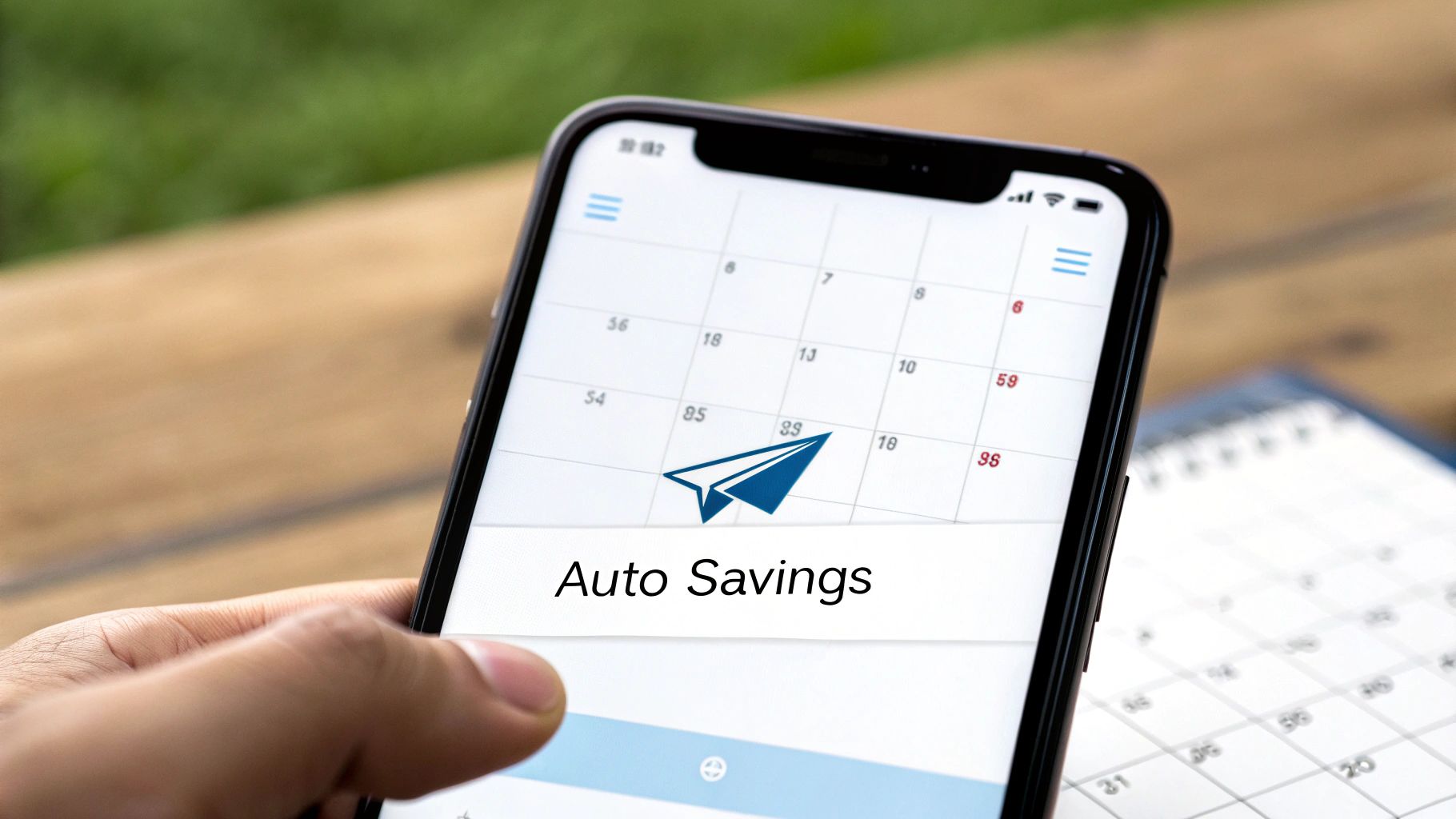
The most powerful way to guarantee you’ll hit your savings goals is to put everything on autopilot. This is the magic of the "set it and forget it" method. By setting up automatic transfers from your chequing account to your savings goals, you’re paying your future self first—right after your paycheque lands. It’s a simple move that prioritizes what’s important before you even have a chance to spend that money somewhere else.
Make Saving Effortless
Relying on yourself to manually move money every month is a recipe for failure. You have to remember to do it, and you have to fight the temptation to skip a month "just this once." Automation kills both of those birds with one stone.
It’s an incredible strategy for building financial discipline without the constant feeling of sacrifice.
Here’s how to make it work for you:
- Time It Right: Schedule your automatic transfers for payday or the day right after. The money is moved before you even notice it’s gone.
- Start Small: If you're new to this, start with an amount that feels easy. Even $25 per paycheque builds momentum and proves the system works. You can always increase it later.
- Direct to the Goal: Send the money straight into a separate, dedicated savings account or goal bucket. This keeps it out of sight and, more importantly, out of mind.
This approach turns saving from a monthly chore into a quiet background process that works tirelessly for your goals.
Automating your savings is the single best way to bridge the gap between your financial intentions and your actual results. It ensures progress happens consistently, month after month.
How NeoSpend Simplifies Automation
This is exactly where modern banking tools shine. An app like NeoSpend is designed to make this process incredibly simple. Instead of having just one generic savings account, you can create multiple named savings "buckets"—one for "New Tires," another for "Holiday Gifts," and a third for "Property Taxes."
Right inside the app, you can schedule recurring transfers to each specific bucket. Need to send $150 to your tax fund and $50 to your vacation fund every month? You can set that up in just a few clicks.
This level of organization and automation keeps you perfectly on track, turning your sinking fund strategy into an effortless habit. You'll be amazed at how quickly your savings grow when you're not even thinking about it.
Your Top Sinking Fund Questions Answered
Alright, now that you've got the basics down, let's dig into a few common questions that always come up when people start their sinking fund journey. Getting these details ironed out will help you feel way more confident as you build your savings plan.
One of the first things people ask is: where should I actually keep this money? For most of your goals, a high-yield savings account is your best bet. It keeps your money safe, earns you a little extra interest, and—most importantly—it’s separate from your everyday chequing account. That little bit of separation is key to avoiding the temptation to dip into it for daily expenses.
How Many Sinking Funds Should I Actually Have?
Honestly, there’s no magic number here. It really just comes down to your own goals and what feels right for you.
My advice? Start small. Pick two or three of your most important upcoming expenses—maybe property taxes, your annual holiday spending, or a new set of winter tires. Starting with just a few keeps things from feeling overwhelming.
Once you get the hang of it, you can easily add more. This is exactly where a tool like NeoSpend shines. Instead of juggling a bunch of different bank accounts, you can just create separate digital “buckets” or savings goals right inside the app. It keeps everything neat, tidy, and super easy to track at a glance.
What if I End Up With Extra Money in a Fund?
First off, congratulations! This is a fantastic problem to have. If you’ve saved for a goal and have some cash left over, you’ve got a few great options.
Having leftover money in a sinking fund isn't a mistake—it's a sign of great planning. It gives you the freedom to either reward your hard work or get a head start on your next goal.
You could:
- Roll it over: Just leave the extra money in the fund. This gives you a nice little head start for that same expense next year.
- Reallocate it: Got another fund that’s a little behind? Move the surplus cash over to give it a boost.
- Treat yourself: Seriously! You earned it. Consider it a well-deserved reward for your awesome planning and enjoy it guilt-free.
At the end of the day, it's all about being intentional. A sinking fund is one of the most powerful ways to turn that feeling of financial stress into a feeling of genuine control.
Key Takeaway: A sinking fund is a simple yet powerful tool that lets you save for specific, predictable expenses over time. By breaking large costs into smaller, automated monthly contributions, you can avoid debt, reduce financial stress, and take control of your money.
Ready to stop dreading big bills and start saving with a clear plan? NeoSpend makes it incredibly simple to set up, automate, and track all your sinking funds in one place. Take back control of your money by visiting NeoSpend's official website to learn more and explore other smart money management tips.