We all know our rent or mortgage payment is coming out on the first of the month, like clockwork. But what about that grocery run last Tuesday? Or the gas you put in the car over the weekend? That’s where variable expenses come in.
Think of them as the costs in your life that never seem to sit still. One month your grocery bill is sky-high because you hosted a big family dinner, and the next, it’s surprisingly low. That’s a variable expense in a nutshell.
What Are Variable Expenses and Why Do They Matter to Canadians?
Let's imagine your budget is a road trip plan from Vancouver to Halifax. Your fixed expenses—rent, car payments, insurance—are the planned stops and major highways on your map. You know exactly when you'll hit them and what they'll cost.
Variable expenses are the spontaneous detours. They’re the roadside attractions, the sudden craving for a great poutine, or the extra fuel needed when you hit unexpected traffic in Toronto. These are the costs that shift and change based on your daily decisions, habits, and what life throws at you.
Getting a handle on this difference is the first real step to taking control of your finances. You can’t just decide to pay less rent this month, but you absolutely can decide how much you spend on takeout, clothes, or that weekend trip. This is where your true power to save money lies.
The Key to Unlocking Your Savings Goals
If you're serious about hitting your financial goals, dialing in your variable spending is the fastest way to get there. Why? Because every dollar you consciously choose not to spend on a coffee or an impulse buy is a dollar you can put toward something that actually matters to you—like a down payment, a dream vacation, or beefing up your TFSA.
Focusing on these fluctuating costs is a game-changer for a few reasons:
- You see results right away. Simple swaps, like packing your lunch instead of buying it, add up faster than you’d think. We’re talking real, noticeable savings by the end of the month.
- You have more wiggle room. When an unexpected bill pops up or you need to cut back, your variable spending is the first and easiest place to make adjustments without turning your life upside down.
- It shines a light on your habits. Honestly tracking these costs can be an eye-opener. You might not realize just how much those daily Tim Hortons runs or Amazon purchases are actually costing you over time.
This is where having the right tools makes all the difference. Instead of wrestling with spreadsheets, a tool like NeoSpend is built to automatically track and sort these moving targets, giving you a crystal-clear picture of where your money is going. Once you see the patterns, you can start making smarter choices without all the guesswork.
Common Variable Expenses Every Canadian Has
Okay, we've got the definition down. But what does a variable expense actually look like on your bank statement? Let's bring this concept into the real world with everyday Canadian scenarios. Think of these costs as the moving parts in your financial engine—they're where you have the most control and the biggest opportunity to make a change.
Spotting them is the first step.
This visual gives you a great snapshot of how these two expense types fit together in a typical budget.
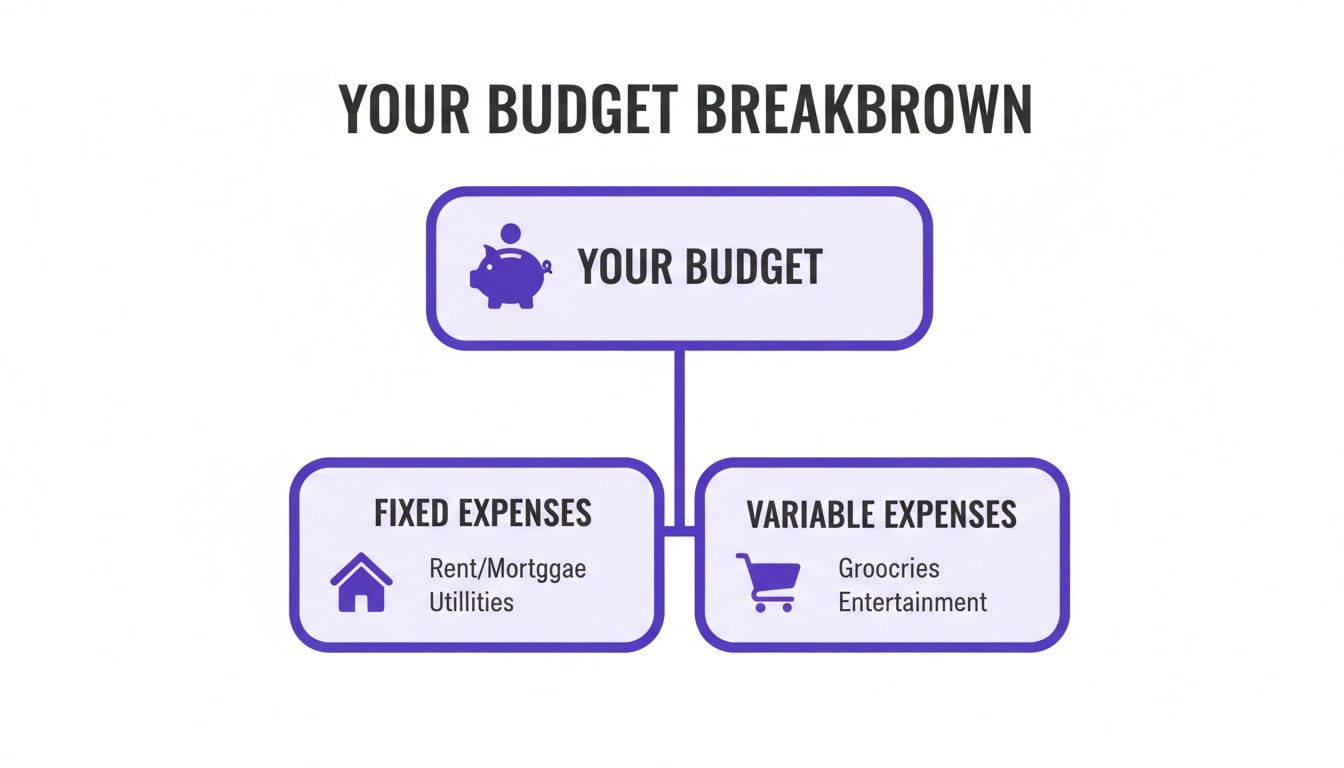
As you can see, your budget is a mix of predictable (fixed) and unpredictable (variable) costs. Your real power to save, adjust, and hit your goals lives almost entirely in that variable column.
Let's break down where you'll find these expenses in your day-to-day life.
Household Utilities and Maintenance
You live in the same place every month, but the cost to keep it running? That almost always changes.
Your hydro bill is a classic variable expense. It’ll jump during a frigid prairie winter or a humid Ontario summer when the heat or air conditioning is working overtime. It’s not the same month-to-month.
Other common household variables include:
- Natural gas for heating your water and home.
- Water bills, which go up or down with your family's usage.
- Home maintenance and repairs, from fixing a leaky faucet to a spontaneous trip to Canadian Tire for new light bulbs.
Food and Groceries
Your spending on food is probably one of the largest and most flexible parts of your entire budget. The final number on your grocery receipt can swing wildly depending on your choices that week.
For instance, one week you might stock up at a discount grocer like No Frills, and the next you might grab specialty items from Loblaws. This category also covers everything from your daily Tim Hortons run and Friday night pizza to ordering in with SkipTheDishes—all highly variable costs.
Getting a handle on your food spending is a game-changer. It’s often the one area where small, mindful adjustments can lead to huge savings over the course of a year.
Transportation Costs
Unless your only transportation is a monthly transit pass (that’s a fixed cost!), your spending to get around probably changes. If you drive, the most obvious variable is fuel. Gas prices are always shifting, and how much you use depends on everything from your daily commute to a weekend road trip up to cottage country.
Other fluctuating transportation costs include:
- Vehicle maintenance, like oil changes or buying a new set of winter tires.
- Parking fees and highway tolls.
- Ride-sharing services like Uber or Lyft for a night out.
Personal Spending and Entertainment
This is the fun stuff. It’s all the discretionary spending that makes life more enjoyable but can also drain your account if you're not paying attention. Think of this as the "wants" category, not the "needs."
Common examples include:
- Shopping for new clothes, the latest tech, or home decor.
- Entertainment, like movie tickets, concerts, or just a night out at the pub with friends.
- Hobbies and subscriptions, from a gym membership you barely use to the collection of streaming services you’ve signed up for.
Trying to keep track of all these moving pieces on a spreadsheet can feel like a full-time job. That's why NeoSpend automatically categorizes these transactions for you. It transforms a confusing bank statement into a clear, simple map of your spending habits, showing you exactly where you have room to make smarter decisions.
How Your Daily Food Costs Shape Your Budget
For most of us here in Canada, food is easily one of the biggest—and most unpredictable—variable expenses we face. It’s one of those categories where tiny, everyday decisions can cause massive swings in your monthly spending, which actually makes it the perfect place to look for some serious savings.
Think about it. The difference between a grocery run at No Frills versus a trip to Loblaws, or how that daily Tim Hortons coffee habit adds up over a month. These choices feel small at the time, but together, they have a huge impact on your financial health throughout the year.

This constant fluctuation is exactly why getting a handle on your food budget is so important. One month might involve a big stock-up trip, a few smaller top-up runs, a couple of dinners out with friends, and those nights where ordering from SkipTheDishes just feels easier. Each of these is a classic variable expenses example that contributes to that ever-changing total.
Why Do Your Food Costs Fluctuate So Much?
There are always a few things pushing and pulling on your food spending. Once you know what they are, you can start making more strategic choices instead of just getting blindsided by a high grocery bill at the end of the month.
The main drivers usually come down to:
- Inflation: When the cost of living goes up, you feel it at the checkout first. Your regular grocery haul can suddenly cost way more than it did just a few months ago.
- Seasonal Produce: Craving berries in the middle of January? They're going to cost a lot more than they do in July. Simply buying what's in season is a great way to manage this variable.
- Convenience Culture: We all love food delivery apps like Uber Eats, but those delivery fees, service charges, and tips add up fast, seriously inflating the real cost of a meal.
All these factors combine to make food spending a tricky beast to tame if you don't have the right system in place.
A young professional in Toronto juggling rent and a social life knows how food costs can sneak up and wreck a budget. According to Statistics Canada, food is one of the largest variable categories for households. In 2023, for instance, food-at-home costs rose significantly across the country. In urban centres like Vancouver, some families saw grocery bills jump by over 10%, pushing their monthly variable food spending from $800 to nearly $900.
This is where an app like NeoSpend can be a game-changer. Its AI automatically sorts out your transactions, so you can see the difference between your grocery spending and your takeout habit at a glance. It might be the thing that shows you your weekend takeout is costing you over $150 a month—a clear pattern you can actually do something about to start saving more.
Taming Your Fluctuating Utility Bills
If you’ve ever opened a hydro bill and thought, “Wait, how is it this much?”, you’ve experienced the classic variable expense firsthand. For most Canadians, utility bills are the perfect example of this. They show up every month like clockwork, but the amount you owe can swing wildly.
One month, your electricity bill feels totally reasonable. The next, it’s a shock to the system. This isn't just bad luck—it’s a direct result of how much you’re using, and that’s almost always tied to the weather. Think about it: a bone-chilling Alberta winter means the furnace is working overtime, while a humid summer in southern British Columbia has the air conditioner humming 24/7. Both scenarios send your energy costs soaring.
These seasonal peaks and valleys are precisely what make utilities a variable expense. The service itself is consistent, but the cost isn't. Instead of just reacting to sticker shock after the fact, the real power comes from anticipating and planning for these swings.
Get to Know Your Energy Spending Habits
The first step to getting a handle on these bills is figuring out why they change. For most of us in Canada, heating and cooling are the biggest culprits. It’s the reason your January and July bills can look worlds apart from what you pay in April or October.
This unpredictability can wreak havoc on your monthly cash flow. According to the Survey of Household Spending from Statistics Canada, the average household spends a significant amount on electricity. The real challenge is that bills can jump by as much as 40% in January in provinces like Ontario and Alberta, thanks to heating demands.
This is exactly where a tool like NeoSpend can be a game-changer. Its bill tracking feature sends you reminders so you never miss a payment, which is great. But its real value is in helping you see the bigger picture. It lets you visualize your spending trends over time, connecting the dots between a cold snap and the spike in your hydro bill. You can literally see how your habits affect your wallet.
Once you can see these patterns clearly, you shift from just paying bills to actively managing them. This insight helps you build a more realistic budget that accounts for those seasonal spikes. You can set money aside when costs are lower to cover the more expensive months, giving you total confidence in your financial plan. No more nasty surprises.
A Simple Strategy to Track and Control Your Spending
Knowing what a variable expense is feels good, but turning that knowledge into actual savings is a whole different ball game. It’s time to move from just knowing to actually doing. The good news is that getting a grip on your variable spending doesn’t mean wrestling with complex spreadsheets. All it takes is a straightforward process and the right tool.
Here's a peek at how NeoSpend can give you a clear, visual map of your spending habits, turning a pile of numbers into insights you can actually use.
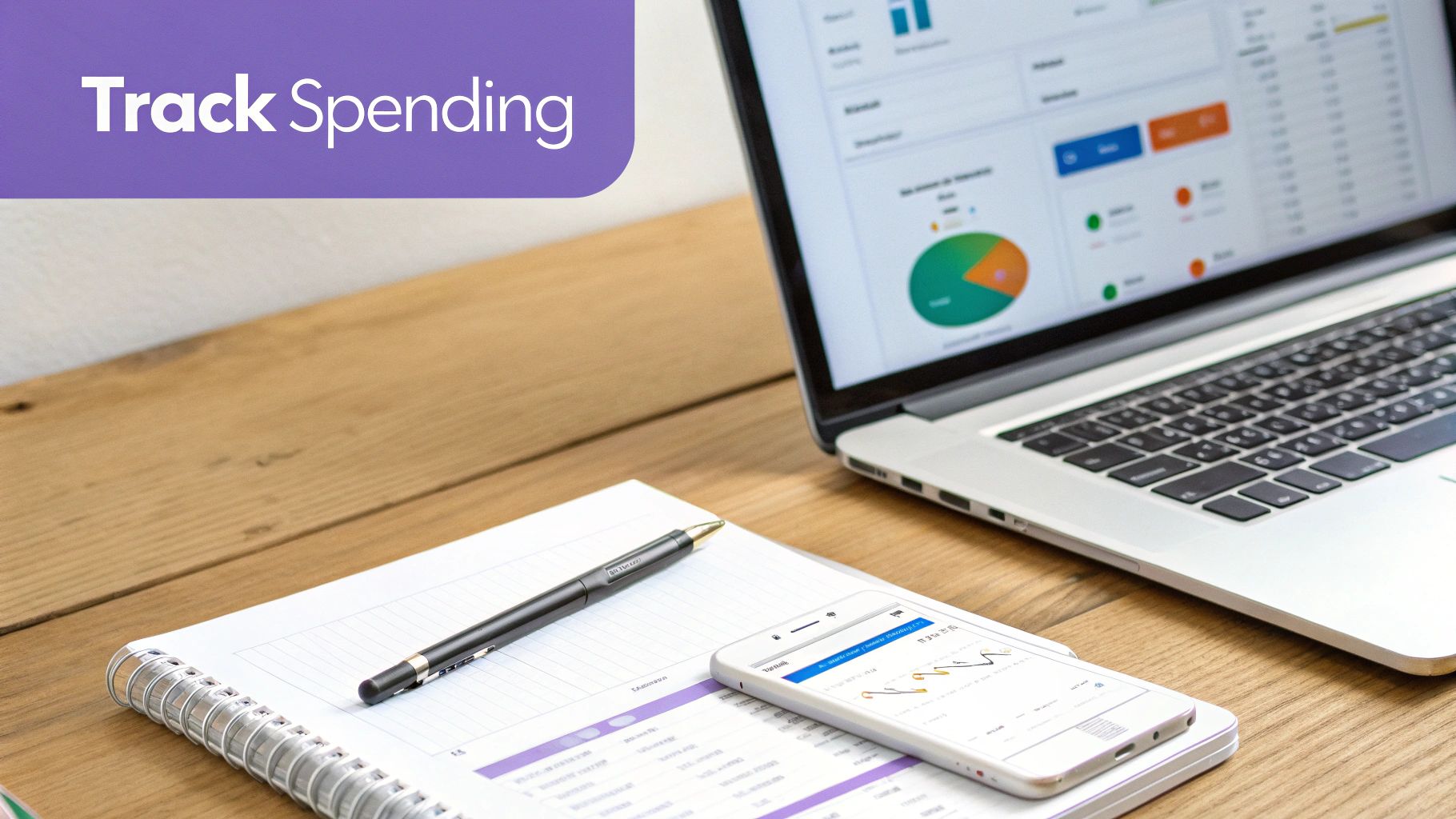
This dashboard shows you instantly where your money is flowing by category. It makes it dead simple to see which of your variable expenses are really making a dent in your budget.
With a clear strategy, that overwhelming task of "budgeting" can become an effortless and even empowering habit. The key is to let technology handle the tedious stuff so you can focus on making smarter financial decisions.
Your Step-by-Step Guide with NeoSpend
Honestly, managing your money well just comes down to doing a few simple things over and over. Here’s how you can take control of every variable expenses example in your budget using NeoSpend's features, which are built specifically for Canadians.
Connect Your Accounts for the Full Picture: First, you need to see everything in one place. Securely link your Canadian bank accounts, credit cards, and other financial accounts to NeoSpend. This gives you a complete, live view of your finances without having to juggle a bunch of different apps or websites.
Let the Tech Do the Heavy Lifting: Forget digging through receipts. NeoSpend’s smart tech automatically scans your transactions and sorts them out for you. That Loblaws trip lands in 'Groceries,' the Petro-Canada top-up goes into 'Gas,' and your SkipTheDishes order gets filed under 'Restaurants'—all in a snap. This is what makes modern budgeting so powerful.
When you automate the tracking, you remove the single biggest hurdle to successful budgeting: the time and mental energy it takes to stay organized. That frees you up to focus on what really matters—making conscious choices about where your money goes.
Set Flexible Spending Targets: Now you can see where your money is going. The next step is to decide where you want it to go. You can create flexible spending targets for those tricky variable categories like 'Shopping' or 'Entertainment'. NeoSpend even helps by suggesting realistic budgets based on your past spending, so you’re setting yourself up for a win right from the start.
Use Smart Alerts to Stay on Track: It’s so easy to lose track of spending during a busy month. NeoSpend acts as your financial co-pilot, sending you a heads-up when you’re getting close to your budget limit in a category. This little nudge gives you a chance to slow down before you overspend, letting you adjust your habits in real-time.
Review and Adjust with Visual Insights: Finally, take a few minutes each week to glance at your visual spending reports. These simple charts and graphs make it easy to see what’s really going on. You might notice that daily coffee habit is costing you over $100 a month, or that you have way more subscriptions than you realised. These are the "aha!" moments that point you toward new ways to save.
Your Action Plan for Financial Control
Alright, let's pull all of this together. Getting a handle on your variable expenses isn't about sucking the fun out of your life. It’s about being deliberate—making sure your money is going toward the life you actually want, not just disappearing on autopilot.
We’ve walked through all kinds of variable costs, from the weekly grocery run to that surprisingly high hydro bill. Now it’s your turn to put that knowledge into practice. The journey to taking back control of your finances starts with one simple decision: to start paying attention.
Small Habits Create Big Wins
It’s the small, consistent habits that really move the needle. Every time you glance at your spending, you’re making a little bit of progress, and those little bits add up to huge long-term goals.
Just think about what those savings could turn into:
- Finally getting that down payment together for your first home in a wild Canadian market.
- Putting cash aside each month for a dream vacation, completely guilt-free.
- Confidently maxing out your TFSA contributions every single year and watching your wealth grow.
The real magic in personal finance happens when you stop reacting to your bank statements and start intentionally directing your money. That’s what true financial freedom feels like—it opens up a world of possibilities.
Mastering your money doesn't have to be a complicated, overwhelming chore. When you have the right tools, tracking every variable expenses example just happens in the background, freeing you up to focus on the bigger picture.
That’s exactly why we built NeoSpend. It takes the manual work out of the equation, automatically tracking and sorting your spending so you get a crystal-clear picture of where your money is going. Find out just how easy it is to finally get a grip on your variable expenses and find that financial peace of mind you’ve been looking for.
Frequently Asked Questions About Variable Expenses
Tackling your variable expenses is a huge step, and it’s totally normal for questions to pop up as you get started. We’ve answered a few of the most common ones to help you feel confident on your path to financial clarity.
What’s the Best Way to Start Tracking My Variable Spending?
Honestly, the easiest way to get going is to let technology handle the heavy lifting. Nobody has time to manually log every coffee, grocery trip, and online purchase into a spreadsheet. That’s a fast track to burnout.
Instead, an app like NeoSpend is your best friend here. Just securely link your bank accounts, and it automatically pulls in and categorizes every single transaction. You get an instant, clear picture of where your money is actually going without any of the soul-crushing data entry. This frees you up to focus on what matters: understanding your habits and making changes.
How Often Should I Actually Look at My Budget?
Consistency is more important than intensity. You don’t need to obsess over it daily. A quick weekly check-in is the perfect rhythm for most people. It only takes a few minutes to see how you’re doing in categories like "Groceries" or "Fun Money" and make sure you’re on track.
This habit helps you spot potential overspending early, so you can make small course corrections before they turn into big problems at the end of the month. Then, do a more thorough review once a month to look at the bigger picture and spot any trends you might be missing.
Think of a budget review less as a judgment on your past spending and more as a planning session for your future self. It’s a forward-looking tool that puts you in control.
Can a Variable Expense Ever Become a Fixed One?
You bet it can! A classic variable expenses example of this is your hydro or natural gas bill. It usually goes up and down with the seasons. But many Canadian utility companies offer an equal payment plan, which averages out your yearly cost into one predictable, fixed monthly payment. Boom—variable becomes fixed.
You can also do this yourself. You could decide to set a firm, non-negotiable limit for a category like entertainment or dining out—say, $200 a month, no exceptions. By treating that "want" as a fixed line item in your budget, you create more stability and make your monthly cash flow that much easier to manage.
Key Takeaway: Understanding and tracking your variable expenses is the most powerful way to take control of your budget. These are the costs you can directly influence, and small, consistent changes here lead to major savings over time. By using a tool like NeoSpend to automate tracking, you can effortlessly see where your money goes and make smarter decisions to reach your financial goals faster.
Ready to trade guesswork for certainty? With NeoSpend, you can finally see exactly where your money goes. Automatically track every variable expense, set budgets that actually work, and watch your financial goals get that much closer. Take control of your finances today.