Understanding the backbone of any Canadian budget starts with fixed expenses. These are the consistent, predictable costs that form the foundation of your financial plan, like your monthly rent or a car loan payment. Unlike variable expenses that change, such as groceries or gas, fixed costs stay the same month after month.
This predictability makes them the perfect starting point for building a budget you can stick to. Knowing exactly where your money is going is the first step toward financial control. In this guide, we'll walk through eight common fixed expense examples you'll encounter in Canada, from your mortgage to your Netflix subscription.
We'll provide simple explanations and practical tips for each category. You'll learn not just what these expenses are, but also how to track and manage them. By using tools like NeoSpend to get a clear picture of your spending, you can turn these predictable costs from a source of stress into a foundation for achieving your financial goals. Let’s dive in and build a smarter budget that works for you.
1. Rent or Mortgage Payments
For most Canadians, housing is the largest and most important fixed expense in their monthly budget. These predictable payments, whether for rent or a mortgage, provide a stable baseline for financial planning. Because the amount is set by a contract, it doesn't change from month to month, making it a classic example of a fixed cost.
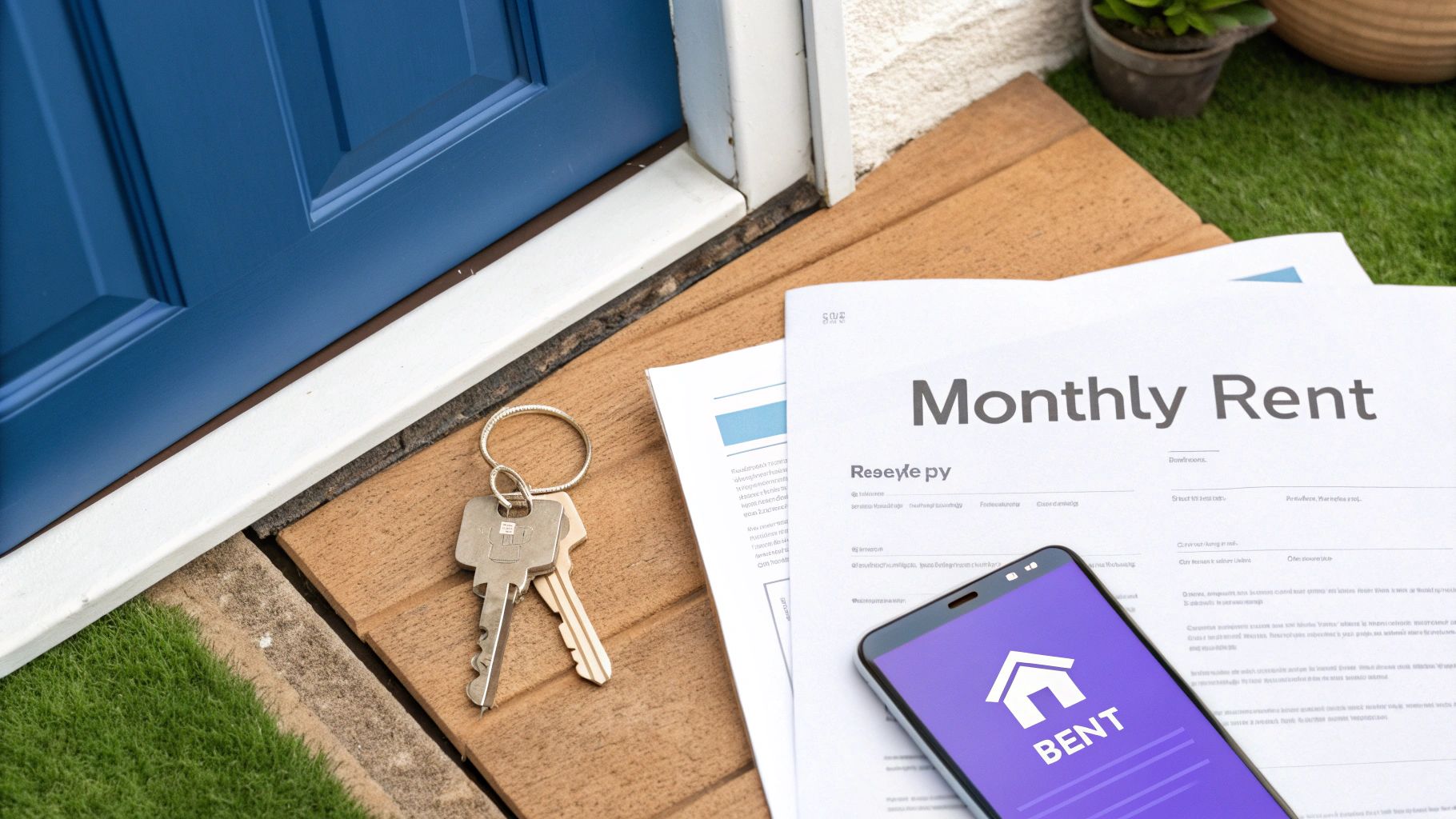
Whether you're a renter in Toronto with a consistent $2,200 monthly payment defined by your lease or a homeowner in Calgary with a stable $2,500 mortgage payment, this expense is non-negotiable and predictable. This reliability is why it’s the cornerstone of any effective Canadian budget.
How to Manage This Fixed Expense
The key is to use the predictability of your housing payment to your advantage. Knowing your exact housing cost lets you calculate your housing-to-income ratio, a key measure of financial health. Financial experts generally recommend keeping this ratio below 35% of your pre-tax income to ensure you have enough money for other needs, savings, and wants.
Keep in mind that while the main payment is fixed, other costs can change. Property taxes and home insurance premiums, often bundled into mortgage payments, can be adjusted annually. This turns a purely fixed expense into a "step-fixed" cost—it stays constant for a year, then steps up or down.
How NeoSpend Helps
Tracking this major expense is vital for your long-term financial stability. Here’s how NeoSpend helps you manage it smarter:
- Automate Tracking: Connect your bank account to NeoSpend to automatically categorize your rent or mortgage payment each month. This gives you a clear record without any manual work.
- Set Renewal Alerts: Use the app’s alerts to set reminders for your mortgage renewal or lease end date. This gives you plenty of time to shop for better rates or negotiate new terms.
- Monitor Affordability: NeoSpend's insights can show you your housing cost as a percentage of your total income, helping you see if you're staying within a healthy range.
- Budget for Changes: If property taxes or insurance are part of your payment, NeoSpend can help you budget for potential annual increases so you’re never caught off guard.
2. Insurance Premiums (Home, Auto, Life)
Insurance premiums are a crucial category of fixed expense examples, providing a financial safety net against life's surprises. These regular payments protect you, your family, and your assets from major financial setbacks. Whether paid monthly or annually, these contractually set amounts are an essential part of responsible financial planning in Canada.
From an Ontario driver with a predictable $150 monthly car insurance payment to a homeowner in Alberta paying $100 per month for home insurance, these costs are consistent. This predictability allows you to build vital protection into your budget without worrying about price swings during your policy term.
How to Manage This Fixed Expense
The best strategy for insurance is to get the coverage you need while optimizing the cost. Since premiums are fixed for the policy term (usually a year), your best opportunity to save money is at renewal time. This is when you should reassess your needs and shop around for better rates to avoid overpaying.
Like mortgages, insurance premiums can be a "step-fixed" cost. While your payments are stable for a year, things like your claims history or industry-wide rate changes can cause the premium to increase or decrease upon renewal. The key is to be proactive when your renewal notice arrives.
How NeoSpend Helps
Managing multiple insurance policies can be tricky. NeoSpend turns this complex task into a simple, streamlined process:
- Track Renewal Dates: Log all your insurance policies and their renewal dates in NeoSpend. This ensures you never miss a deadline to review your coverage or shop for a better deal.
- Set Smart Alerts: Create alerts 30-60 days before a policy renews. This gives you a heads-up to compare quotes from other providers and negotiate with your current one.
- Find Savings: Seeing all your policies in one place can highlight opportunities. For example, bundling your home and auto insurance with the same company often leads to significant discounts.
- Budget for Increases: Use the app’s budgeting tools to set aside a little extra for potential premium increases at renewal, so you're always prepared.
3. Regular Utility Bills (Internet & Phone)
While some utilities like hydro can fluctuate, many Canadian households have utility bills that are excellent fixed expense examples. Your internet, home phone, and mobile phone plans are typically locked in at a consistent monthly rate based on your service contract. This predictability makes them easy to budget for.
For instance, a family in Ottawa might have a $150 per month bundled internet and TV package, locking in that rate for their two-year contract. These strategies turn a recurring bill into a manageable fixed cost, which is great for budgeting. Other utilities, like gas or electricity, can also become fixed if you sign up for an "equalized billing" plan, which averages your annual cost into predictable monthly payments.
How to Manage This Fixed Expense
The main strategy here is to lock in the best rate possible and avoid "bill creep." When your contract ends, providers may switch you to a higher month-to-month rate. The goal is to always be on the best available plan by shopping around before your contract expires.
For hydro or gas, enrolling in an equal billing plan offered by providers like BC Hydro or Enbridge can smooth out your cash flow. You'll avoid the shock of a high heating bill in January or a big air conditioning bill in July. These plans make your utility costs "step-fixed"—the monthly payment is consistent for a year and then adjusted based on your actual usage.
How NeoSpend Helps
Managing and optimizing these recurring bills is key to a healthy budget. NeoSpend gives you the tools to stay in control:
- Spot Bill Creep: NeoSpend automatically tracks your recurring payments. If your internet bill suddenly jumps after a promotion ends, you'll see it right away.
- Track Contract End Dates: Set a reminder in NeoSpend a month before your internet or phone contract ends. This gives you time to find a better deal and avoid overpaying.
- Bundle and Save: Seeing all your utility payments in one place might reveal savings opportunities. Bundling services with providers like Bell or Rogers often locks in a lower, fixed rate.
- Budget for Reconciliation: If you're on an equal billing plan for hydro, use NeoSpend’s savings goals to set aside a small amount for any year-end adjustments, ensuring you’re prepared.
4. Loan Payments (Student, Personal, Car)
For many Canadians, loan repayments are a major fixed expense. These predictable monthly payments for student debt, personal loans, or vehicles are set by a contract with a clear repayment schedule. Because the amount and due date are consistent, they are a perfect example of a fixed expense that is crucial for accurate budgeting.
Whether you’re a recent graduate in Halifax with a $250 monthly student loan payment or a car owner in Calgary making a steady $400 payment, these costs are non-negotiable. Their predictability makes them easy to budget for, but missing a payment can hurt your credit score, so diligent tracking is essential.
How to Manage This Fixed Expense
The best way to manage loan payments is to use their predictability to protect your credit and become debt-free faster. Knowing the exact amounts and timelines lets you build a reliable budget and find opportunities to pay them down sooner.
While the monthly payment is usually fixed, the interest rate might not be. If you have a variable-rate loan, your payment could change if interest rates go up or down. It's also important to distinguish between the minimum payment (fixed) and your ability to make extra payments (variable), which can save you a lot of money in interest over time.
How NeoSpend Helps
Consistently tracking and managing your loan payments is vital for building a strong credit history. Here’s how NeoSpend helps you stay on top of your debts:
- See It All in One Place: Connect all your loan accounts to NeoSpend to see your total debt and payment schedules in one dashboard. This gives you a clear, real-time overview of what you owe.
- Set Payment Reminders: Use the app’s alerts to set reminders for payment due dates. This simple step helps ensure you never miss a payment and protects your credit score.
- Watch Your Progress: NeoSpend’s tracking features let you visualize your loan balances going down over time. This can be a huge motivator as you get closer to being debt-free.
- Budget for Extra Payments: Use NeoSpend's budgeting tools to find extra cash. When your budget allows, you can plan for extra payments to reduce your principal and save on interest.
5. Subscription Services (Streaming, Apps, Software)
In our digital world, subscription services have become a major category of fixed expenses for many Canadian households. From streaming entertainment and fitness apps to productivity software, these consistent monthly or annual charges are predictable. However, they can easily multiply, leading to "subscription creep" where forgotten services drain your budget.
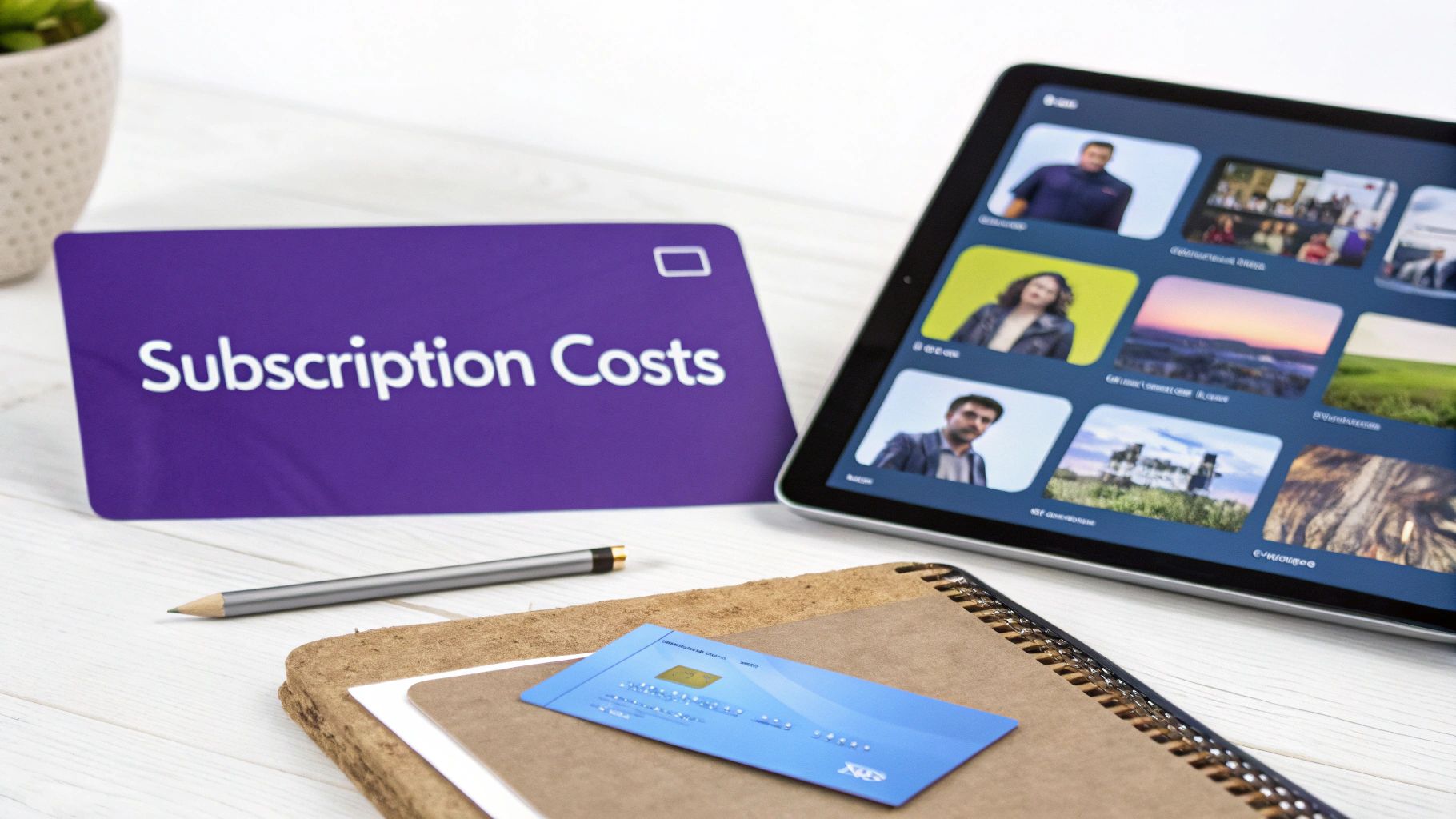
A family in Calgary might pay over $70 a month for multiple streaming services, while a professional in Montreal might pay $50 a month for several apps. These small, individual costs add up. Because they are billed automatically, they are a classic fixed expense example that needs regular review.
How to Manage This Fixed Expense
The best strategy for managing subscriptions is to actively audit them instead of letting them run on autopilot. Unlike your mortgage, you have full control to cancel or pause these expenses. The goal is to eliminate waste and make sure every dollar spent on a subscription is delivering real value.
A proactive approach turns this expense from a passive drain into a managed part of your budget. For example, paying for a service annually instead of monthly can often save you 15-20%. This shifts the expense from a small monthly charge to a single, larger fixed cost for the year, but the savings can be significant.
How NeoSpend Helps
Actively managing your subscriptions is key to preventing budget bloat. NeoSpend provides the tools to take control of these recurring fixed expense examples:
- Find All Your Subscriptions: Connect your bank and credit card accounts, and NeoSpend automatically detects and lists all your recurring payments. This reveals any "ghost" subscriptions you forgot about.
- Do a Quarterly Audit: Use the app's categorized list to review your subscriptions every few months. Ask yourself if you still use and value each service, and cancel any that aren't worth it.
- Spot Duplicates: NeoSpend can help you see if you're paying for multiple services that do the same thing, like two different music streaming apps.
- Set Annual Plan Reminders: If you switch to an annual plan to save money, use NeoSpend’s alert feature to set a reminder before the renewal date. This gives you time to reassess its value before committing to another year.
6. Property Tax and Condo Fees
For Canadian property owners, property taxes and condo fees are significant and predictable fixed expenses beyond the mortgage. Property taxes are required by your municipality to fund local services, while condo fees are monthly payments for the maintenance of a shared building. Both are non-negotiable and follow a set schedule.
A homeowner in Ontario might pay $4,000 in annual property taxes, while a condo owner in Toronto could pay a consistent $500 per month in maintenance fees. While the annual property tax bill can change based on municipal assessments, it remains a predictable expense for the year, making it a key part of any homeowner's financial plan.
How to Manage This Fixed Expense
The strategy for managing these costs is to budget for them proactively and understand their "step-fixed" nature. Your condo fee might stay the same for a year, but it can increase annually. Similarly, property tax is fixed for the current tax year but is reassessed periodically. Acknowledging this pattern prevents surprises.
For example, a Vancouver property owner might see a 3% annual property tax increase from $4,000 to $4,120. By anticipating this, they can adjust their monthly savings to cover the new amount. Ignoring these potential increases is a common budgeting mistake that can strain your cash flow when the higher bill arrives.
How NeoSpend Helps
Properly tracking and forecasting these costs is essential for a healthy housing budget. Here’s how NeoSpend simplifies the process:
- Budget Monthly for Annual Costs: Even if you pay property taxes once a year, use NeoSpend to set aside a fixed monthly amount (e.g., $333/month for a $4,000 annual bill). This turns a large, infrequent payment into a manageable fixed expense.
- Track Fee Increases: When your condo board announces a fee increase, update your recurring expense in NeoSpend right away. This keeps your budget forecast accurate.
- Save for Tax Hikes: Create a dedicated savings goal in NeoSpend for expected property tax increases. This helps you build a small buffer to absorb the higher cost without stress.
- Get a Clearer Picture: By categorizing property taxes and condo fees separately from your mortgage, NeoSpend gives you a clearer picture of your total, true housing costs.
7. Childcare Costs
For many Canadian families, childcare is a significant and non-negotiable fixed expense. Whether it's for daycare, preschool, or after-school care, these costs are typically paid as a flat monthly fee based on a service agreement. This consistency makes it a prime example of a fixed expense that must be included in any family budget.

The costs vary dramatically across Canada. A family in Vancouver might face bills of $1,600 per month for one child, while a family in Quebec could pay a subsidized rate closer to $200. Regardless of the amount, the predictable nature of this payment makes it a cornerstone of family financial planning.
How to Manage This Fixed Expense
The best strategy for managing childcare costs is to treat them as a core budget item and take advantage of available government support. These payments are essential for working parents. Recognizing their fixed nature allows you to build the rest of your budget around this major expense, ensuring it's always covered.
It's also important to analyze this expense in relation to your income and government benefits like the Canada Child Benefit (CCB). This helps you understand your net cost. The predictability of both the expense and the benefit payments provides a stable financial picture, which is essential for long-term planning, like saving for your child's education.
How NeoSpend Helps
Properly managing this major expense can significantly improve your family's financial health. Here’s how NeoSpend can help you stay in control:
- Track Your True Cost: Use NeoSpend to tag all childcare payments under one custom category. This shows you the real financial impact on your budget at a glance.
- Offset with Benefits: Track your CCB deposits as income in the app. By comparing your childcare costs against this income, you can clearly see your net monthly cost.
- Set Payment Reminders: Use NeoSpend’s alerts to remind you of payment due dates, helping you avoid late fees and maintain a good relationship with your provider.
- Plan for Changes: Childcare costs can change annually. Use the budgeting feature to forecast these changes and adjust your financial plan accordingly.
8. Professional Memberships and Licensing Fees
For many Canadian professionals, maintaining their credentials is a predictable fixed expense. These mandatory fees, paid to regulatory bodies and professional associations, are non-negotiable costs required to work in fields like accounting, engineering, nursing, and skilled trades. They are a clear example of a fixed cost, as the amounts are set by the governing body and are due on a recurring schedule.
For instance, a Chartered Professional Accountant (CPA) in Alberta faces annual fees of around $1,100, while an electrician in British Columbia has a predictable yearly renewal cost. These expenses are essential for your career and must be factored into your budget.
How to Manage This Fixed Expense
The best strategy is to treat these fees as a necessary business expense and plan for them in advance. Since these costs are fixed for the year, you can budget for them well ahead of time, avoiding a financial scramble when the invoice arrives.
Furthermore, these fees are often tax-deductible for self-employed individuals and freelancers, which directly reduces their taxable income. The fixed nature of the expense makes it easy to claim this deduction. It's different from a variable cost like attending a conference; your core licensing fee remains constant or increases in predictable steps.
How NeoSpend Helps
Properly managing these career-critical expenses is crucial. NeoSpend offers tools to streamline this process:
- Automate and Categorize: Connect your bank account or credit card to automatically track and categorize your licensing fee payments. Tag them as "Professional Dues" for easy identification at tax time.
- Set Renewal Alerts: Use NeoSpend’s smart alerts to set reminders 60 days before your renewal deadlines. This prevents any risk of your license lapsing, which could interrupt your work.
- Budget for Increases: Professional bodies often announce fee increases in advance. Use NeoSpend’s budgeting tools to create a dedicated savings goal to cover the higher cost next year.
- Simplify Tax Time: Export your transaction history from NeoSpend to easily provide your accountant with clear documentation of these tax-deductible expenses, ensuring you maximize your claims.
Key Takeaway: Master Your Fixed Expenses for Financial Control
We've covered a lot of fixed expense examples, from your monthly rent and insurance premiums to professional fees and subscriptions. The main takeaway is simple: identifying and understanding these recurring costs is the bedrock of any successful budget. It’s not just about listing numbers; it’s about creating a predictable foundation in a world of financial uncertainty.
This stability is your greatest asset. When you know exactly how much of your income is spoken for before the month even begins, you regain control. You can then make smarter decisions about your variable spending, savings, and investments. Your budget transforms from a list of rules into a roadmap to your goals, whether that’s saving for a down payment in Vancouver or building up your TFSA. Mastering your fixed expenses is the first, most important step on that journey.
Ready to gain effortless clarity on your finances? The NeoSpend Inc. app securely connects to your Canadian bank accounts, automatically identifies your fixed expenses, and provides insights to help you track and optimize your spending. Discover hidden subscriptions and see your complete financial picture in one place. Download the app from NeoSpend Inc. today to start managing your money smarter.